Code » AMIGA
The Commodore AMIGA history and my participation during the late 1980s

The Amiga was an innovative 16-bit home computer, originally built and designed 1983 by a group of talented people at Amiga Corporation. This company was then acquired by Commodore in 1984, who themselves had been instrumental in the spread of home computers with the original Commodore PET, the VIC-20, and later, the incredibly successful Volkscomputer Commodore-64.
One of the people responsible for the success of the Amiga was Dr. Tim King. He brought to the Amiga an operating system that he had been working on at Cambridge University called Tripos.
This was a fully pre-emptive multi-tasking system written almost entirely in the programming language BCPL – a precursor to C. Tim King worked with the team at Amiga who had already produced a kernel, and moved Tripos on top of this. Others in the team produced device drivers and an award-winning graphics and user interface.
After having very much success with the original Amiga 1000 and the Amiga 500, the Commodore marketing failed to keep the momentum going and bringing interesting and affordable successor machines. Instead, they wasted their resources by producing PC compatible designs. Eventually, Commodore went bust, and passed the remains on to Escom – who also went bust. Despite the trademark rights still wandering around and an apparant lack of force behind companies trying to bring back the Amiga operating system, what remains is a hugely vibrant Amiga User’s community.
Demo Scene
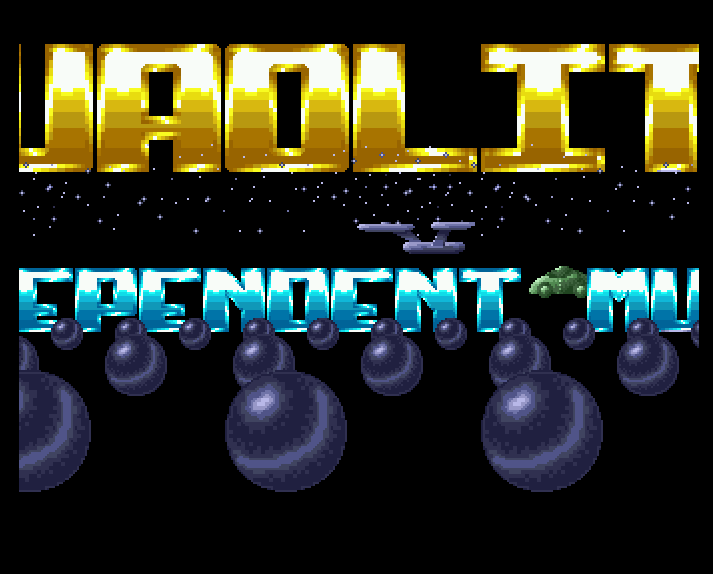
Demos have been around as long as personal computers have been popular, but they didn’t become a regular occurance until about 1983. Demos started as a small program that, sadly, was used to identify who had cracked the game you were currently (illegally) playing. They were a good test of the programmer’s abilities, because they had to fit in a pretty small space — usually 256 to 1024 bytes. Obviously, they were all coded in either assembler or machine language. Around this time, they mainly started showing up on the Commodore 64, and the Apple ][ computers, being the most popular home computers at the time. Around this time, a gradual shift occured, from people cracking games to writing graphic/sound demonstrations that showed off the computer they had just learned to program. Sure, cracking games was still popular, but some people decided that learning about the machine and using it as a tool for creativity was “cooler” than cracking one dime-store game after another. Around this time, in 1984-1985, the first demos were born, as people willing to show off their computer and programming skills learned new ways to wrestle more power and speed out of the computer. Early demos showed up on the C64, the Apple ][, and the Atari 400/800/XL computers. And then came the Amiga.
When the Amiga computer from Commodore hit the home-computer market in 1985, it was not very well received initially in the USA — but it took off like wildfire in Europe. It was manufactured and sold primarily in Europe, and made its way into many households. The Amiga was different — it was the first low-cost, home computer built for multimedia — which, back then, was a term almost unheard of. It had incredible sound and graphics capabilities, and shipped with a multitasking operating system.
Clearly, the Amiga was the machine to program anything graphical on, like games and presentations, offering the best well-rounded graphics and sound and speed. It was the clear upgrade path for many people wanting more from a computer than the aging C64 could give them. The so called “demo scene” flourished on the Amiga, mainly due to the fact that the computer was fast and a with the custom chips a lof of cool hardware tricks, e.g. multiple video pages, multiple resolutions, four-channel digital stereo sound (for the first time, computer music actually sounded like music), and nearly complete control over the graphics hardware – down to the point of offering multiple resolutions on the same screen.
The Amiga demo scene truly created revolutionary products from 1986 - 1990. For a while, there was a surge of products from the Amiga and the Atari ST (which had its own successful demo scene) because the two sides were competing, and constantly trying to out-do the other.
My Participation
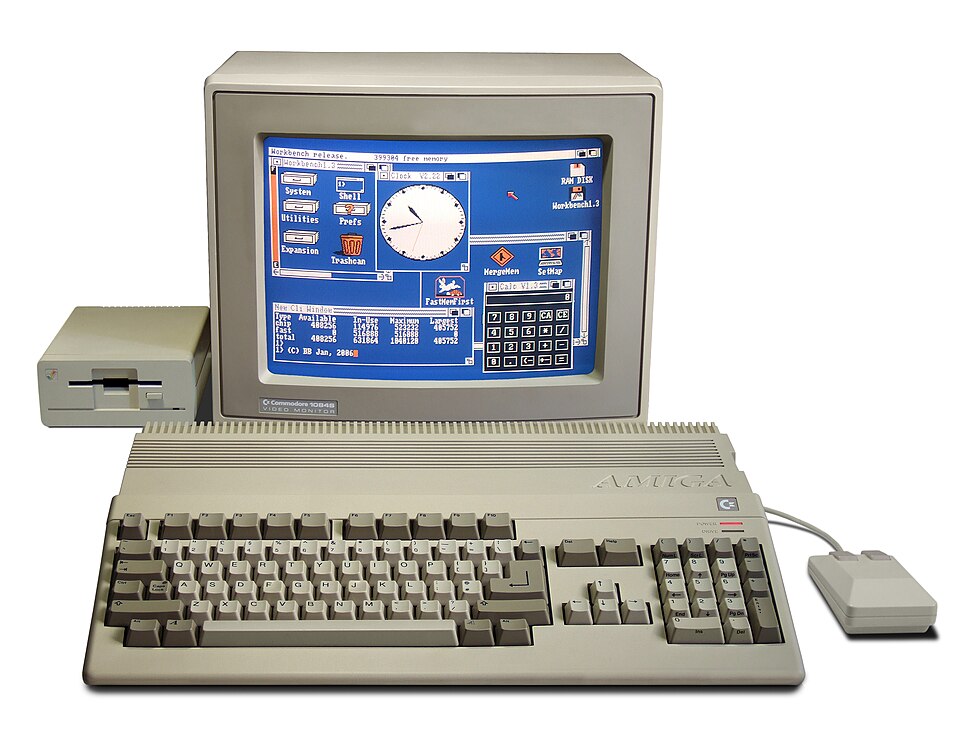
I bought one of the first batches of Amiga 1000s which appeared 1986 in Germany. This was my second computer (the first one was the Commodore 64) and I started to program it in 68000 assembler. Eventually, I got hold of the legendary SoundTracker program, written by Karsten Obarski for his Arkanoid style game and started to create music in .mod format. During 1987 – 1990, I was part of several more or less famous groups in the Amiga scene. My nickname was “Lord Performer Artworx” (LPA) and in chronological order I was part of:
- Magic Software Team
- TGM-Crew (Break | Pouet)
- Thrust (Break | Pouet)
- Traitors (Break | Pouet)
- Threat (Break | Pouet)
- Supreme (Break)
Also of some historic interest might be
- My record in the great Kestra | Bitworld archive, and
- an interview done by the great Amiga Music Preservation site.
- Sploder unavailable took many of my .mods as background music options for their game creator.
Note that I never was directly involved in cracking games or distributing illegal stuff – I just programmed intros and made music. With this page, I want to remind me and you of these great days which made me greatly enjoy this part of my youth.
There are three sections, namely modules (music I composed for the AMIGA), demos, and tools.
LPA AMIGA Modules
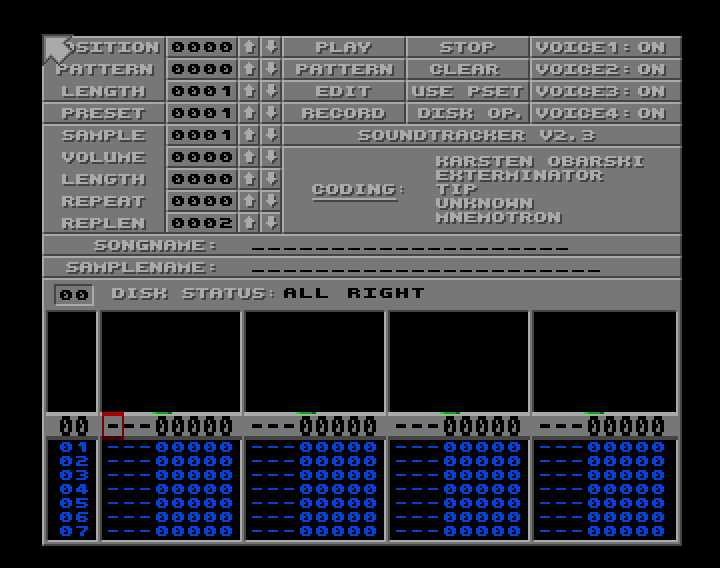
This section contains a list of modules containing songs I composed in the period between 1986 and 1989. They’re of varying quality, bear with me, I was a teen back then (and no, I’m not Beethoven). Unfortunately, this list is not complete — after all it’s been a while and not everything has been preserved. Special thanks need to go out to my good old friend Dr. Martin ‘Equalizer’ Leissler who converted all these songs to PC – without him this archive would not exist. For some of the modules, I could even remember parts of stories or moods which were involved when I wrote the songs. I have to write these stories down – now! – before I forget even more of those things.
All of these modules are (C) Michael ‘Mickey’ Lauer – feel free to download and distribute further to your liking, but please retain my credits and backlink to this site.
A
- After the War: Kind of a post-apocalyptic theme. One interesting thing to notice is that the lead sample was taken from the legendary Commodore C64 game “Impossible Mission”. It says “Another Visitor. Stay a while – stay forever.”
- Amiga goes Heavy: Odd mixture of electronic zap-sounds, distorted guitars, electro-style drums and a lead flute.
- Art of Techno: Got a new metallic bass sound and the drums from Cameo’s “Word Up”. Add to that the “Dumm” voice sample taken from “Peter Gunn” in a version performed by the “Art of Noise”.
- Asian Dance: Some Fifths intervals in the beginning plus an asian style lead flute.
B
- Bacardi: The whole TGM team met at the house of our graphic artist Dennis “Exolon” Schirmer and drank a lot (guess what :)).
- Back Again: I took a pause for some months. Then I got pestered by our inofficial team leader (Hi Phil) to write a new demo and a song for a copy party. The demo was compiled out of some routines I had in stock – the songs starts out original then fades into a tribute to “All she wants is” from “Duran Duran”. Also featuring one of the characteristic LPA attributes: playing melodies with metallic noise samples.
- Beyond 2000: Odd and futuristic thing with a crazy lead sample. Can’t remember what I smoked while composing that 😉 The choir is neat though.
- Beyond Heaven: One of my better pieces. The lead melody tells a story and it has some great harmonies. Features a characteristic attribute of LPA songs… at some point, the song seems to end but starts into something new, more or less still embracing the main theme.
- Beware of Traps: Got that new jump’n’run game “Sword of Sodan” featuring a great scary voice sample at the start of each level. Combined that together with a tribute to “Wild Boys” from “Duran Duran” to something original.
- Bonni on the Run: Neat little piece. Actually, I can’t remember who Bonni was and why he (or she) was on the run, but I do remember that I wrote this tune for one of the TGM Demos. The rest of the crew was very upset by that demo because I did put a huuuuge “Lord Performer Artworx” and a mini “of TGM-Crew” into it… hehe… 🙂
C
- Call me Now: Peter Gabriel’s Pan Flute meets a base line and an intrusive lead. One of my more annoying pieces…
- C.B. Today: One of those melancholic tunes motivated by intense feelings. She was and still is a very good friend of mine (actually she bought a house right next to ours and is living with her family there) – although there were times when I would have us wanted to be more than just good friends…
- Choose Her: This is a crazy tune featuring an insane lough ripped from an action game. There is also a voice sample saying “Choose your warrior” which motivated the title.
- Chop Sui: Pretty boring tune with some chinese sounding bells and a Psygnosis Choir line.
- Christina: One of three more or less melancholic pieces dedicated to a girl I fell in love with. Part I was getting to know her.
- Christina II: One of three more or less melancholic pieces dedicated to a girl I fell in love with. Part II was the rise of hope that we may get together.
- Christina III: One of three more or less melancholic pieces dedicated to a girl I fell in love with. Part III was how to cope with rejection.
- CHZ2P: A nice piece featuring a few samples of one of my synthesizers, the SIEL Opera 6. A funny anecdote: When I used the “File Open” Dialog in the SoundTracker to load a high-hat sample, I accidentally clicked on Disk.info (containing some binary metadata) instead of on the real sample. The Disk.info sounded like pure noise – then again, not much different from a real high-hat and so I kept it 🙂
D
- Deadlock: A melodic tune featuring some nice themes and great samples ripped out of Psygnosis games.
- Deadlock ‘89: Variations on the deadlock theme (see above) featuring a nice flute and some NASA voice samples. This tune was written for one of the demos which won a copy-party award.
- Deutschmark: Totally insane song around a voice sample saying “Deutschmark” which meant the currency we had in germany before the Euro. Took a sample and a part of the theme from the “Salt’n’Pepa” hit “Push It”.
- Deutschmark II: Based on the voice sample “Deutschmark” (see above) with only slightly better melodies and chords. In fact, besides the voice sample, it’s a completely different song 🙂
- Discovery: Nice melody – unfortunately I can’t remember if the title was a reminiscence to the space ship “Discovery” that appeared in Arthur C. Clarke’s Novel “2001”. Featuring some references to recurring themes of my own (and foreign) songs.
E
- Electro Dance: One of my more interesting tunes featuring lots of great samples from the Kawai K4 synthesizer and nice harmonies.
F
- The Factory: Got some new metallic samples to fool around with. The “voice lead” part is a bit annoying though.
- The Factory II: The second part of a melancholic tune dedicated to pieceworkers in a factory. Featuring a great factory machine sample. Unfortunately the first part (The Factory I) is lost.
- Find a Way: Monumental tune with some really nice samples – among those someone singing “Find a way to me”. No idea where I got that from.
- Fire In Rotenburg: I went for a weekend vacation with a girl I liked (maybe more). We met her sister and some other friends in the town “Rotenburg an der Fulda”. Besides half of one night it was a horrible weekend for me. I hated it. Burn baby, burn…
- Flexatone: I have absolutely no idea what a flexatone is… any takers? There’s a nice voice sample in this song.
- F*ck up the volume: Behind this *cough* odd title lays one of my earlier works with a dumb brain sample and an uninspired collection of laser zaps, a bassline, an orchestra hit and a telephone call sample. *sigh*
- Funky Up: This is my first module ever. A small brass theme, bass, and a (boring) rhythm.
G
- Game Over: I always wanted to write a game on the AMIGA. I started on a few but never finished one. This is the game over music for one of those game fragments.
- Game Over ‘89: The original game-over music had a nice melody. This is a reprise with some new samples.
- Git-Song: Based around a nice lead guitar sample, this guitar song tells a story. Note the drum phrase which is modelled after a song by the hip hopper “Tone-Loc”.
H
- Harjakiri: One of my best pieces feauturing an exceptional drum track and nice guitars. This module was written for my famous AMIGA demo “Hypnotic Circles”.
- Heavy’n’Hard: A reminiscent to the game “Hard’n’Heavy” (The Great Giana Sisters II) using some samples and trying to recreate kind of a dark mood full of suspense. The drum track was inspired by a fellow AMIGA musician called Darius “Mark II” Zehndeh (from Team Quadlite).
- Hell is waiting: An odd and dramatic theme featuring samples from the SIEL Opera 6 and the Yamaha RX5 drum machine.
- Heroine: A soft and melodic tune featuring a great choir sample.
- Hit me: A strange collection of different themes.
- HQC – Heavy Quality Crackings: This is a tribute to the first authorities in the AMIGA demo scene. HQC – High Quality Crackings were ahead of their time. This song is variation of a theme appearing in one of their first intros – just slightly more heavy 🙂
- HQC’s: Yet another tribute to the High Quality Crackings team featuring a cool voice sample saying “Thrust”.
I
- I wish to lay above you: One of my first AMIGA sound tracker songs. No idea about the motivation for the title though *cough* (teen boy feelings, you know) 😀
- Inside the byte: The title is almost the best of this song. Three melodic themes (one is from Rob Hubbard’s “Sanxion”) on a crazy industrial rhythm and some Psygnosis choirs. The bass sample has been ripped from Depeche Mode’s “Behind the wheel”. The snare is from a Yamaha RX5 drum machine. All in all the typical “qualities” of an LPA song ;-).
K
- KreuzQuer: Odd theme collection featuring samples taken of recordings by Sven Väth – a famous DJ and music producer from Frankfurt/Main, Germany.
L
- Little Theme: Nothing spectactular – a lead choir plus drums in the Mark II style.
- LPA Theme: LPA Theme featuring some old-style arpeggios.
M
- Mega LPA Mix: Pretty long and Monumental piece featuring the theme from “Bitte Bitte” by the German group “Die Ärzte” and a lot of miscellaneous other themes.
N
- Now or Never: Dark and calm theme featuring LPA’s ubiquitous orchestra hits 😉
O
- Oldie Time: A collection of patterns from older LPA songs.
P
- Paperboy Title Theme: Title theme of a game I never finished.
- Popcorn: Cover version of the famous instrumental song “Popcorn”
- Psychoanalysis I: Dark and mysterious theme featuring samples from the C64 game “Impossible Mission”
- Psychoanalysis II: Dark and pulsating theme. One of my favourite songs for driving through the night.
R
- Red Castle: Starting out calm and dark then fading into something more happy. A lot more happy. Featuring Psygnosis drum samples.
S
- School: A dull piece. The only thing worth mentioning are the drums.
- ShortPut: Nothing spectacular except some nice pizzicato endings and once again samples from the SIEL Opera 6.
- Siren: Tiny little melody and some nice drum patterns. Then a siren appears.
- Siren ‘89: Basically a copy of Siren (see above) which later on fades into “Being Boiled” by “The Human League”.
- Sisters: A cover version of “Geschwisterliebe” by the german band “Die Ärzte”.
- Skirts: One of the rare happy tunes with a nice and cute melody. No idea about the title *g*. The second part of the song features a weired voice sample saying “Mann ich hab’ kein Bock” which translates roughly into of “Gee, I’m not motivated.”
- Song: Now this is an inspired title… seriously though, quite a long and monumental piece featuring a reprise of “Beware of Traps” (see above) and some obligatory orchestra hits.
- Suicide: Laser and roboter samples plus a pulsating drum track based on the “Harjakiri” (see above) – which explains the title reference.
- Superman: This is totally insane. The whole thing is just crazy especially because of the braindead voice samples, among these one singing “Shallallalaaaa” 🙂 I had a lot of fun when I composed that.
- Supervisor: One of my favourites. A majestic piece featuring trumpets and other interesting samples from the Kawai K4 forming some broad harmonies.
- Supreme Loader: Pretty minimalistic thing I wrote as a loader music – that is a song that plays while the application loads more data into RAM. Yes that was no problem in the 80s on the AMIGA.
T
- Tatort: Named after a german crime show for which I always wanted to compose a soundtrack. Nice theme, nothing unusual though – and definitely not a soundtrack 🙂
- Taurus 7: Music from the asteroid Taurus 7.
- The Bright Location: One of my first soundtracker modules. Nice pulsating piece with a fresh melody.
- Techno Club: Nothing techno-style, really. More or less a dark piece with some metallic sounds.
- Tempest: I got a new action game called “Barbarians”, where two fighters fight with swords. This game featured some great sword-on-sword sounds which I used in this tune. The rest is less spectactular.
- Testsong: Besides that – uhmm – semi-inspired title, it’s a short and pretty dull thing.
- The Flag: This is great! A really nice guitar song with a story telling melody, a solid song layout and a nice sound mix. Definitly one of my best.
- The Last: A mix of distorted guitars and fat drums. Not the strongest melody though.
- Theme of Magic: Title theme of one of my game fragments. This time it was an adventure game which hasn’t been completed :-/
- The Thieves: One of my earlier works. This one was initially been released with the name “Les Cambrioleurs” which was a new word I learned in my french class in school. When it got distributed, one of our distributors renamed it and eventually it got famous. I kept the name.
- Thinking ‘89: Modest and rather calm piece. Seems to be a reprise of a song named “Thinking” which unfortunately got lost.
- Thrust Me: One of my rare happy tunes. Written for an intro loader when I was a member of “Thrust”.
- Tubular Bells: A bow to Mike Oldfield, the original composer of Tubular Bells.
U
- Uninvited: A marvellous module. Great drums, an outstanding synthesizer, and some good melodies. Thirty years have passed now and I have yet to discover a synthesizer that is capable of such a delicious pad sound.
V
- Vanessa: AMIGA adaption of an old song I wrote together with my friend Oliver Linge. Dedicated (of course) to a really young and fresh girl I met when I was in school.
- Vanessa II: Remix of “Vanessa” (see above) with some higher quality samples.
- Vanessa Remix: Yet another remix embracing the “Vanessa” theme (see above).
If you have something that sounds like it’s mine, please notify me!
LPA AMIGA Demos (Excerpt)
Over the years I participated in a number of AMIGA demo productions. Here are a few of them:
![First Intro [TGM-Crew] Demo Screenshot](https://content.pouet.net/files/screenshots/00051/00051756.png)
First Intro [TGM-Crew] – Download here.
This is my first AMIGA production after I joined TGM-Crew. It’s actually pretty bare, but so was my AMIGA knowledge back then (and is again now – 30 years after). Programmed completely in 68000-assembler (like all my other AMIGA releases), we have an animated star field, some colored copper bars, and a scroll text. Last but not least, one of my first AMIGA modules (Funky Up) is included as well.
![Synth Sample [TGM-Crew] Demo Screenshot](https://content.pouet.net/files/screenshots/00051/00051754.png)
Synth Sample [TGM-Crew] – Download here.
This is without any doubt the most impressive TGM-Crew production, not necessarily technical-wise (although it had a bootblock loader, star field, copper field, scroll text), but concerning the idea.
For the synth sample intro, we wanted to have a dancing comic character based on 3d lines, however none of us had the necessary math knowledge yet, so we had to fake it. Our graphics artist Dennis did lots of stills, which we then played back one after another. Other groups were pretty impressed, until they managed to analyze the demo 😉
Originally this was a complete demo disk with many tunes, but unfortunately it has been lost in the tunnel of time. The only remaining thing is an excerpt binary from a compilation disk – without the dancing character.
![LPA Intro [TGM-Crew] Demo Screenshot](https://content.pouet.net/files/screenshots/00051/00051755.png)
LPA Intro [TGM-Crew] – Download here.
I remember that this one stirring up quite a lot of discussions. For some reasons I no longer remember, I was a bit angry with TGM-Crew and put an insanely huge “Lord Performer Artworx” and a tiny “of TGM-Crew” into it. It featured animated sound bars for the four sample sound channels and some Blitter objects (BOBs) following sinus paths – I think it was one of my first demos using the Blitter for anything but a scroll text.
![Hypnotic Circles [Thrust] Demo Screenshot](https://content.pouet.net/files/screenshots/00029/00029175.png)
Hypnotic Circles [Thrust] – Download here. See on video.
I like this one a lot, it features a lot of triangles moving in sinus-derived curves. In contrast to other intros, the triangles are not BOBs but rather sprites (with sprite reusing thanks to a clever spread-and-collect sort routine) – hence we had a lot of spare processing power per raster screen. This production featured a nice reflection effect that was only visible on PAL AMIGAs (which had a bunch of extra raster lines compared to NTSC). To put credit where credit is due: This demo was inspired by another demo done by our good friend Zeronine (Team Quadlite).
![First Intro [Supreme] Demo Screenshot](https://content.pouet.net/files/screenshots/00093/00093930.png)
First Intro [Supreme] – Download here.
This is a coproduction I did with my good old friend Dr. Martin ‘Equalizer’ Leissler. We merged bobs, a sinus scroller, sound meters, and a 3D vector routine.
There are many more productions of mine that – thanks to the amazing people organized in various retro communities – have been saved.
LPA AMIGA Tools
It was only after migrating from the C64 to the AMIGA that I realized how much of a difference good tools make. On the C64, tools were severely limited – as was the platform. On the AMIGA there were a lot more opportunities and during the time I was active, I remember three projects, I want to mention:
SafetyNet TrapHandler [Debugging Tool]
Most AMIGA demos created in those days pushed the operating system aside to gain full access to the hardware. To exit a demo (or recover from a crash), you usually had to reboot. While this was acceptable practice, it made the development of a demo quite hard, since every reboot took some time and you had to reload your whole environment.
To improve this, I created a system called “SafetyNet TrapHandler”. The idea was to launch the actual demos with preconfigured “trap handlers” – so that a software interrupt or exception would bring you back into the development environment – without any necessary reboots.
This was only possible due to the AMIGA’s distinction of ChipMem and FastMem. ChipMem was accessible to both the CPU and all the coprocessors, while FastMem was only accessible from the CPU. Thus, all demos had to run in ChipMem (this is a simplified explanation, but it has to do for the limited scope here) – which means FastMem was left untouched by the demos and I could use it to carry the development environment.
Apart from a certain – rare – kind of full system crash (which we called ‘freak-out’, since it created strange sounds and bitmap patterns on the monitor), all other crashes (e.g., guru meditations) were recoverable with my trap handler.
This was a great efficiency booster for development. Unfortunately both the source and the binary code of this project has been lost.
Cornucopia Sound System [Composer Toolkit and Play Routine]
After several years composing with various derivates of the original SoundTracker program, I became somewhat bored of sample-playback. I also wanted to optimize my code by writing a play routine that took even less raster lines than the SoundTracker.
So I wrote an own sound system named “Cornucopia Sound System” that was based on wave shaping rather than static samples. It sounded fresh and new and many people were impressed by early releases – however before I could finish it, the floppy disk that contained the code, broke – and I had no backup. 🙁 In an hopeless attempt to vent, I furiously threw the broken disk onto the wall and it damaged the wallpaper – the mark is still visible in my old room at my mother’s apartment.
I was so frustrated that I never resumed work on this project. With regards to backups, I guess I really learned something though.
The Final Toolkit [Monitor/Ripper/Assembler/Deassembler]
Next to the aforementioned trap handler, directly inspecting and manipulating memory was an important part of the debugging experience back then.
To optimize this, I created a toolkit (which I later released publicly) which allowed you to step through the memory very quickly. Since it was often used right after a crash or a reboot, it had to have a very tiny memory footprint in order not to overwrite too much of the memory that was to be inspected. Next to the usual hexadecimal bytes view, it featured a deassembler, a graphical view, and also an audio(!) view. That way it could be (ab)used to rip graphics and samples from other productions – and yes, I’m guilty for having done that once or twice.
Toolkit became so ubiquitous to our daily development routine that I allowed my team mate and good friend Martin Leissler to pester me so long until I also added a full-fledged assembler.
This software was my first commercial release. It was distributed by the german AMIGA magazine “KickStart” – and while I didn’t earn a lot with it, it felt great to have finally produced something that was worth “real money” to other people.
You can download the commercial release of this tool here. Trivia: I also created a private offspring of the toolkit called “Black Edition” which – in order to save even more space – decompressed itself into part of the workbench screen memory 🙂