The weather app I swore I’d never write
There is a short list of apps every developer is contractually obliged to build at least once: a to-do list, a Markdown editor, a podcast player, and — the final boss of clichés — a weather app. I held the line for twenty years. This is the confession of how I finally caved.
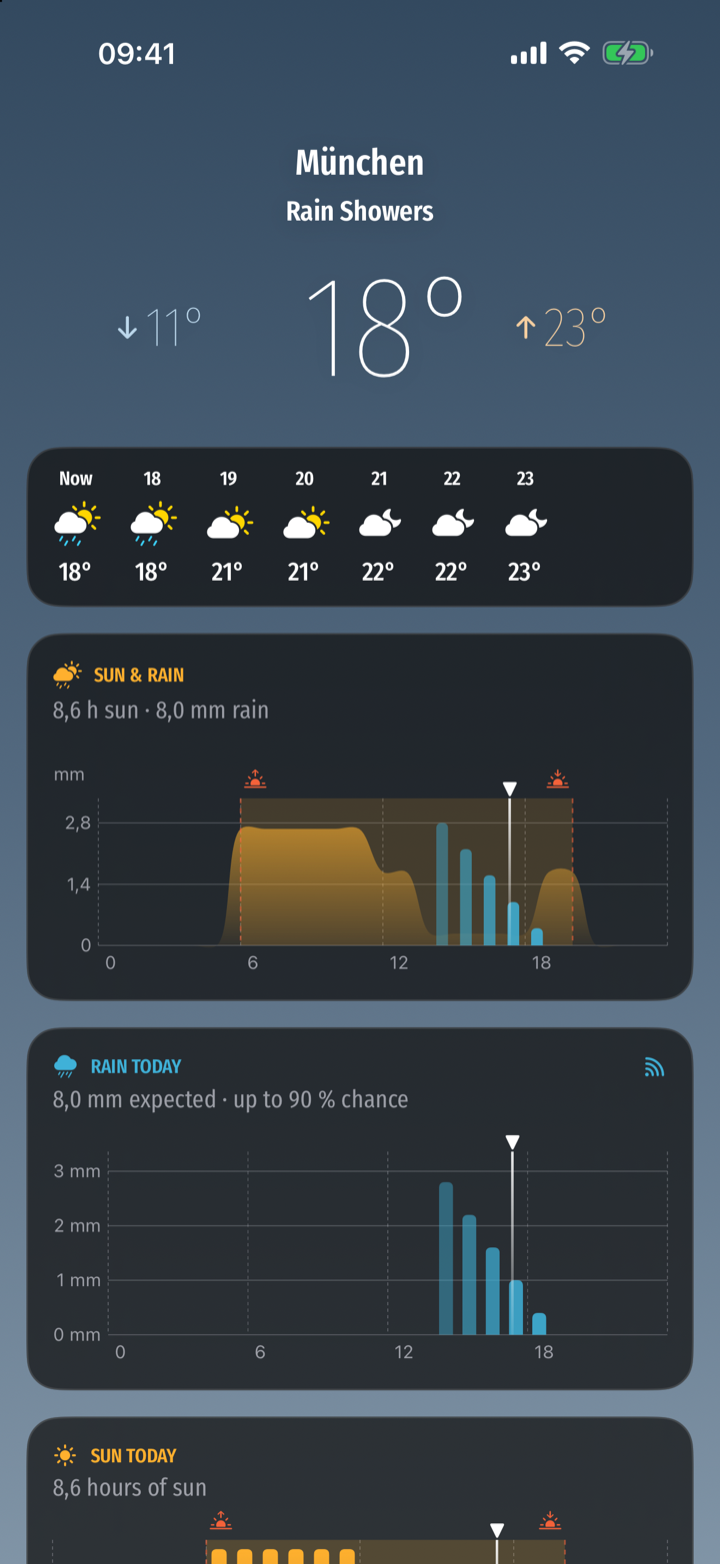
For most of those twenty years I didn’t have to, because I had WeatherPro. It wasn’t the very first app I bought — but it was one of the early ones, and it has been on the App Store since 2009, which in App Store years is roughly the Pleistocene. For the better part of seventeen years it did exactly one thing and did it beautifully: it told me whether to take a jacket. We grew old together. The trouble is that only one of us aged gracefully. Somewhere along the line of modern iOS releases it started to feel like a museum piece running behind glass — slow to launch, occasionally confused about where I am, visibly held together by the heroic but finite patience of whoever still maintains it. Every update was a small prayer that it would survive the next one.
So I did the reasonable thing first: I went looking for a replacement. I’ll spare you the full ethnography of the modern weather-app store, but the highlights were an app that wanted an account to show me the temperature, one that had grown a chat assistant nobody asked for, and several that were, structurally, a banner ad with a thin film of meteorology on top. I wanted the sky at a glance. The market offered me a loyalty programme.
You know exactly what happened next, because you would have done the same. I thought the four most expensive words in software — how hard can it be? — and opened Xcode.
It is, of course, harder than it looks
The data was the easy part. Open-Meteo serves genuinely good forecast data, for free, with no key and no account, under a friendly licence. That alone removed about 80% of the reasons the other apps are the way they are. The remaining 20% was the part I actually cared about: making the sky legible.
The centrepiece is a chart that puts the two things you actually want to know — is it sunny, and is it going to rain — into one picture: sunshine as a soft area, rain as bars, framed by sunrise and sunset, with a marker for now.
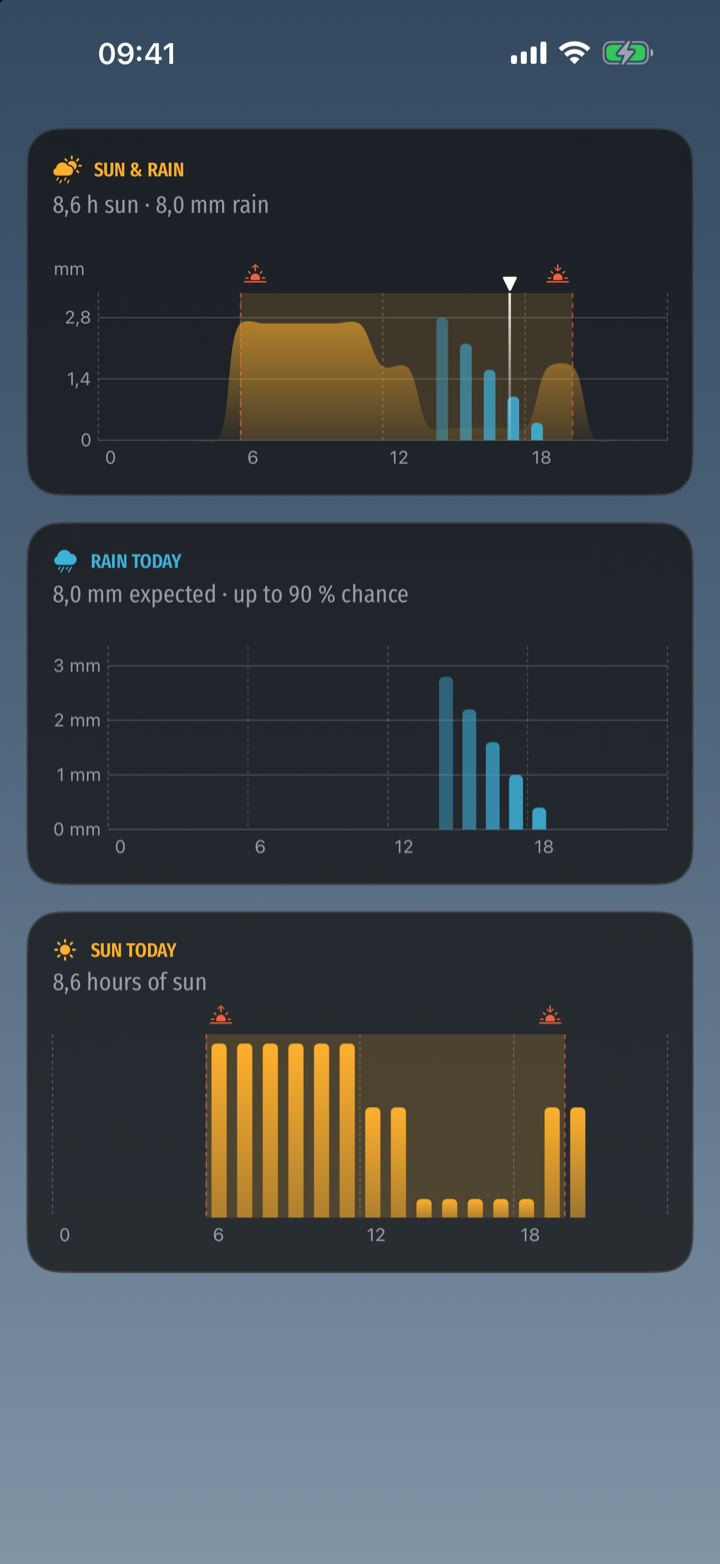
I must admit there’s a small, knowing crime in that chart: the y-axis is labelled in millimetres of rain, and the sunshine curve cheerfully shares it without having any honest business being measured against it. I went back and forth on this for an embarrassingly long time before deciding that a glance card is allowed to be impressionistic, and that meteorological honesty can live ten pixels lower in the two detail charts. This is, as ever, the other 90 percent of the work: nobody will ever see the afternoon I spent on the smoothness of one shoulder of one curve.
One forecast, four screens
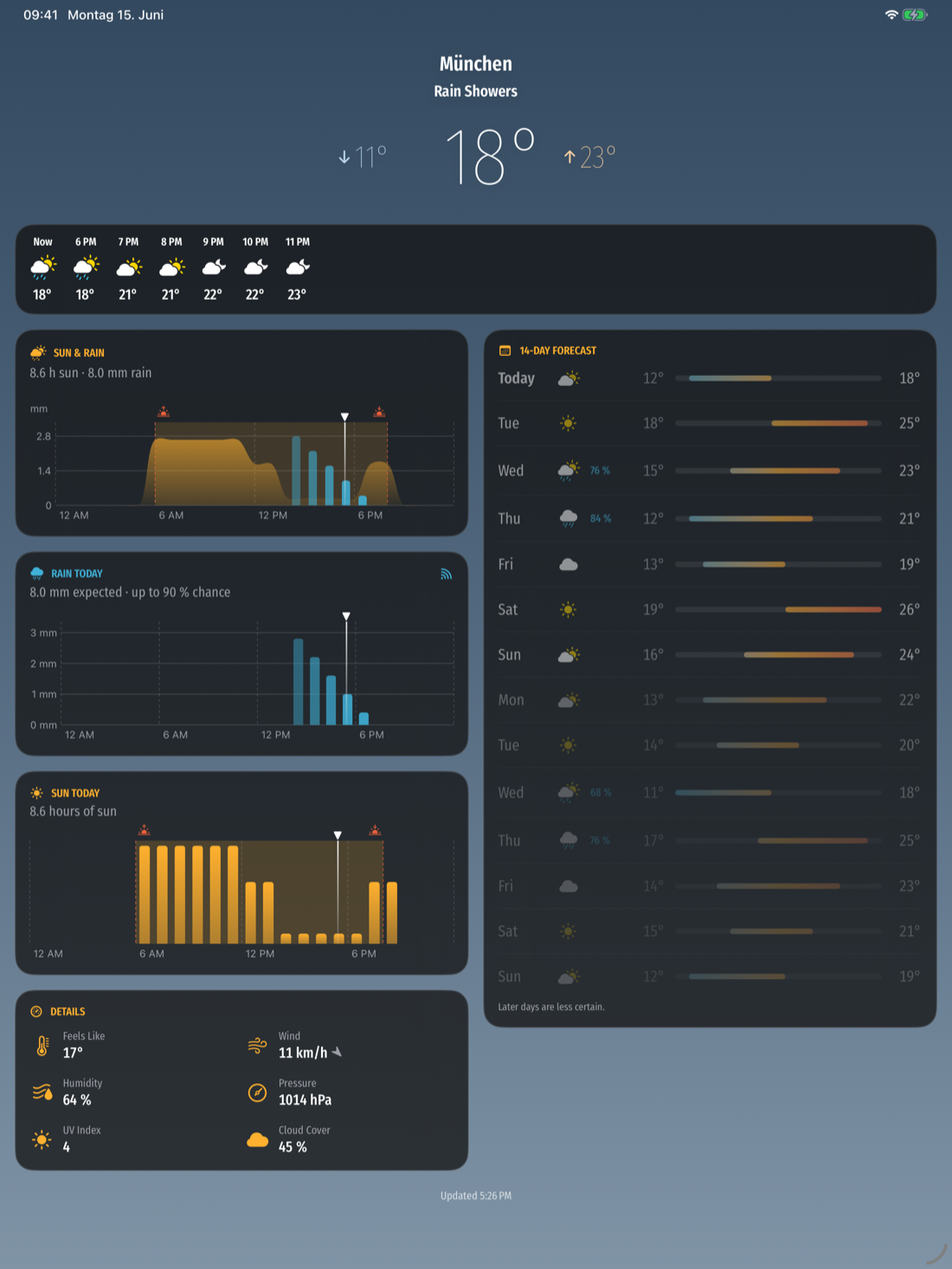
Because I’ve apparently learned nothing, SunDog isn’t just an iPhone app. It’s also on iPad, where the extra room earns a proper two-column layout:
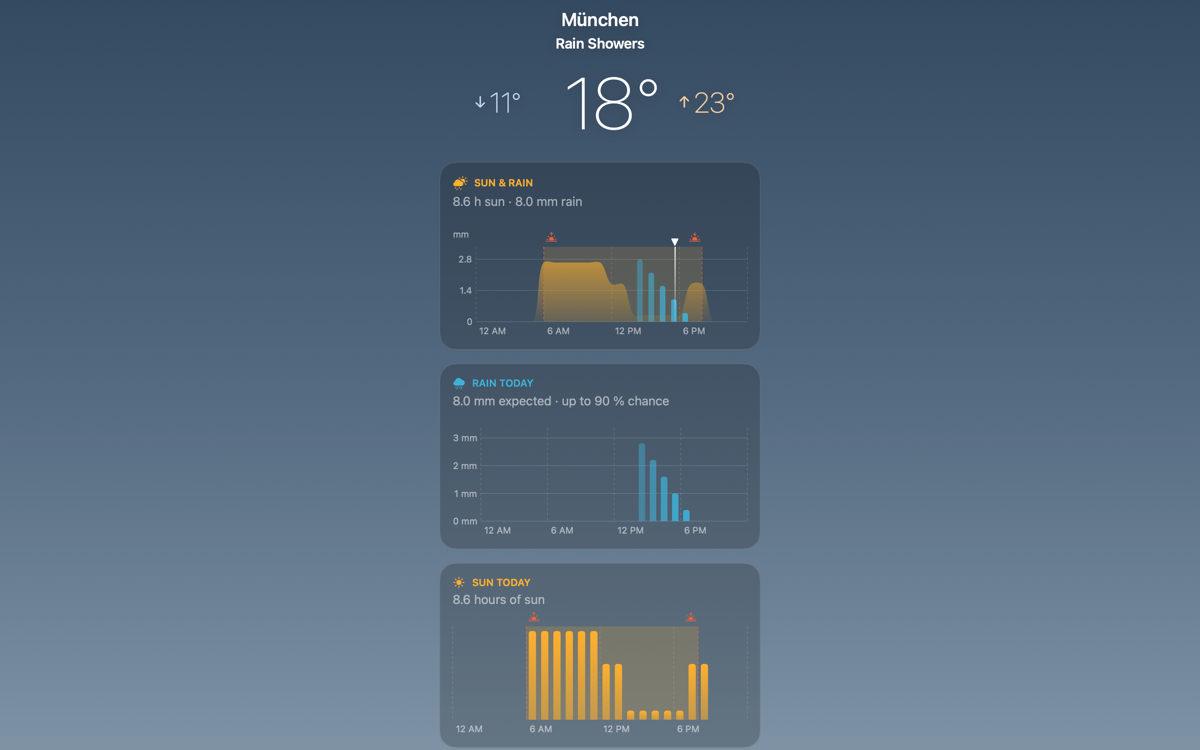
…on the Mac, as a menu-bar app that drops the whole forecast into a popover, because the natural habitat of a weather check is the corner of your screen, not a Dock icon:
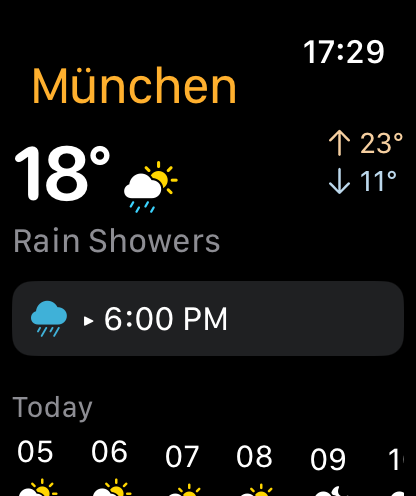
…and on the Apple Watch, reduced to the one question a wrist is good for — what is it doing now, and what’s it about to do:
About the name
A sundog — a parhelion — is a real thing: two bright spots that flank the sun when light refracts through ice crystals high in the sky. It’s the kind of small, easy-to-miss wonder you only catch if something nudges you to look up. When the conditions are right, the app quietly suggests exactly that. It seemed like a fitting name for software whose entire ambition is to make you glance at the sky and then put the phone away.
SunDog is free, has no account, no ads, and no tracking, and it will stay that way. It’s in TestFlight now while I sand down the last of that 90 percent; the public release follows once I trust it with your jacket decisions — stay tuned!
And WeatherPro? It’s still on my home screen. Some loyalties you keep even after you’ve replaced the thing they were for :)